+256-702 595 926 | info@bookgorillatracking.com

Complete Guide to Bwindi Impenetrable National Park


Bwindi Impenetrable National Park is one of Uganda’s most treasured destinations, and for many travelers, it is the emotional centerpiece of an African safari. Famous worldwide for gorilla trekking, Bwindi is also a living museum of biodiversity: ancient rainforest, dense vegetation, waterfalls and streams, and an ecosystem that supports far more than just the iconic mountain gorillas.
This complete guide covers everything you need to plan a successful Bwindi trip, including where Bwindi is located, what to expect on a gorilla trek, best times to visit, how trekking works, what to pack, how much it costs, safety and ethical guidelines, and how to extend your experience beyond gorillas.
Where is Bwindi Located?
Bwindi Impenetrable National Park lies in southwestern Uganda, bordering communities and neighbouring conservation areas. It is best known for its steep, thick rainforest, so dense and rugged that the park’s name feels literal. Here, the forest rises across dramatic terrain, and the conditions create an ideal habitat for mountain gorillas.
Gorilla trekking is the flagship experience, with guided visits to habituated gorilla families. Alongside gorillas, you may encounter other wildlife like monkeys and forest birds. Impressive rainforest scenery characterized by misty canopies, rich vegetation, and secluded valleys. Bwindi is not a park you rush through. Even the drive to the trailhead can feel like part of the journey because the landscape is so alive, and the road conditions often shape your schedule.
The Gorilla Trekking Experience
The main reason most visitors come to Bwindi is to trek and see gorillas in their natural habitat. But the trek is only one part of the experience. Your day typically becomes a sequence of anticipation, careful planning, and then a quiet, behavior-focused encounter once the gorillas are located. Gorilla trekking in Bwindi is done with habituated families, groups that have been trained gradually to tolerate the presence of humans during controlled trekking visits. Rangers and trackers work to locate them each day.
A typical trekking day flow
While exact timing can vary by lodge and your assigned starting point, most treks follow a structure like this:
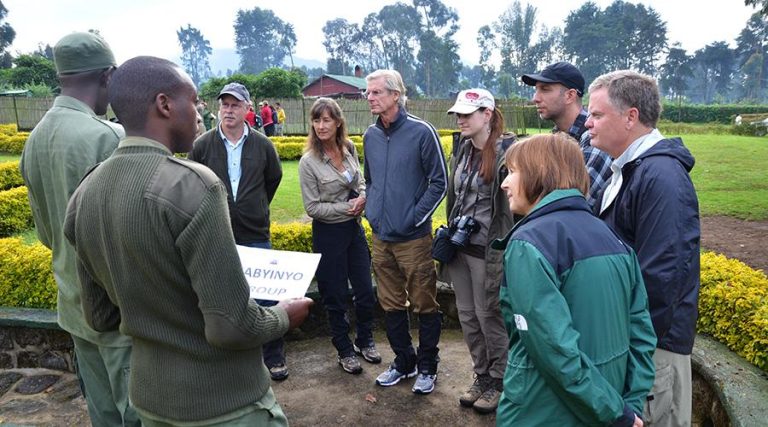
Early briefing: You’ll meet rangers and guides for rules and safety instructions.
Heading to the trailhead: You’ll move into the forest behind trackers.
The trek: Expect a hike through dense vegetation, sometimes steep and muddy.
Finding the gorillas: Once located, you’ll be allowed a limited time to observe.
Returning and debriefing: You return to the meeting area and reflect on the encounter.
How long is the trek?
Trek length can vary widely depending on where the gorillas are and how quickly trackers locate them. Some treks are relatively short; others take longer and involve significant elevation and slippery ground.
How long you’ll spend with gorillas
Most trekking programs include a time limit for viewing once you reach the gorillas, to protect their behavior and manage human impact. This creates a special kind of pressure: not “rush,” but “focus.” People often find that the time feels both short and completely unforgettable.
Bwindi’s Main Sectors
Bwindi is large and rugged, and gorilla trekking trailheads are organized by sector. Where you stay can influence trekking logistics, starting points, drive duration from your lodge, and overall comfort on trek day. Most itineraries route travelers through one of the main sectors, each with slightly different access and scenery.
Many first-time visitors underestimate how much energy the day requires. Lodges located closer to the trail areas can reduce stress and improve your experience, especially if you’re not used to steep forest terrain.
Best Time to Visit Bwindi
Bwindi can be visited year-round, but weather affects trail conditions and comfort. The gorilla trek happens in the rainforest, so rain or mist can be part of the experience even during drier months.
Typically, travelers prefer periods when rainfall is lower because: trails can be less muddy, visibility can be better, and the overall trekking experience may feel more manageable.
During wetter months, trails may become muddy and slippery, vegetation is lush and extremely green, the forest atmosphere can be dramatic and beautiful, but your trekking effort may be higher.
If you’re traveling specifically to do gorillas, plan around gorilla permit availability first, then choose the season that best fits your comfort.
Beyond Gorillas, Activities That Enrich Your Bwindi Trip
Although gorilla trekking is the headline, Bwindi has more to offer. Many travelers add a second or third experience to deepen their connection to the park.
Road travel can take longer than expected in Uganda. Building at least one buffer day (or choosing itineraries that reduce tight turnaround schedules) improves your chance of enjoying the trip rather than constantly running late.
Photography Tips for Bwindi
People often ask how to capture gorillas without ruining the experience. The key is to remember: gorillas come first.
- Use a camera setting that handles low light (rainforest conditions).
- Keep your camera ready during the viewing period.
- Avoid blocking the ranger or pushing forward.
- Follow group spacing, don’t break etiquette for the “perfect shot.”
Some of the best photos come from moments of interaction, feeding, sitting, resting, or juveniles playing. Observing patiently can lead to stronger images than frantic shooting.
Common Questions (Quick Answers)
Is Bwindi suitable for first-time safari travelers?
Yes. It’s one of the most meaningful destinations for first-timers, though be prepared for trekking days.
Is gorilla trekking safe?
Gorilla trekking is generally safe when you follow ranger instructions and group rules. Your guide and rangers manage the experience.
How physically demanding is it?
It can be demanding due to steep terrain and mud. You don’t need extreme fitness, but you should be comfortable hiking.
Can I do Bwindi even if it rains?
Yes. Rain is part of the rainforest. The trek continues under controlled conditions, but trail conditions may be tougher.
Conclusion
Bwindi Impenetrable National Park isn’t only a destination, it’s an experience that reshapes expectations. Serengeti and savannah safaris often feel like “watching wildlife at a distance,” while Bwindi feels closer, quieter, and more intimate. You’re not just scanning for animals; you’re trekking into a living rainforest to meet a habituated family of gorillas and witness how they move through their world.

[…] decide whether your itinerary should use Bwindi Impenetrable National Park or Mgahinga Gorilla National Park. If you choose Bwindi, you should also consider the trekking […]
[…] Bwindi Impenetrable National Park […]
[…] Bwindi Impenetrable National Park […]
[…] disturbance. for travellers seeking gorilla trekking trips, they can opt for uganda parks such as Bwindi and Mgahinga or volcanoes national park of […]
[…] researching gorilla safaris often compare Kahuzi-Biega with Uganda’s Bwindi Impenetrable National Park, Uganda’s Mgahinga Gorilla National Park and Rwanda’s Volcanoes National […]
[…] Bwindi Impenetrable National Park lies in southwestern Uganda, across parts of Kanungu, Rubanda, and Kisoro districts. The park protects a significant proportion of the world’s endangered mountain gorillas, making it one of Africa’s most important destinations for gorilla trekking. […]
[…] Experience one of Africa’s most extraordinary wildlife encounters on this 3 Days Uganda Gorilla Trekking Safari from Kigali. This short Uganda safari takes you from Kigali, Rwanda, across the border into southwestern Uganda for an unforgettable mountain gorilla trekking experience in Bwindi Impenetrable National Park. […]
[…] border areas are also close to Uganda’s famous attractions, including Lake Bunyonyi, Bwindi Impenetrable National Park, Mgahinga Gorilla National Park, Murchison Falls National Park, and the scenic Kigezi […]
[…] can also consider a longer itinerary that includes gorilla trekking in Bwindi Impenetrable National Park. However, a demanding summit expedition followed by another strenuous activity should be planned […]
[…] gorillas, chimpanzees, elephants, lions, birds and numerous other species. Protected areas such as Bwindi Impenetrable National Park, Kibale National Park, Murchison Falls National Park and Queen Elizabeth National Park are important […]
[…] the best safari lodge in Bwindi Impenetrable National Park is an important part of planning a successful Uganda gorilla trekking safari. Whether you are […]
[…] Bwindi Impenetrable National Park for mountain gorilla trekking. […]
[…] a Uganda safari, Lake Bunyonyi is an excellent place to slow down after gorilla trekking in Bwindi Impenetrable National Park or Mgahinga Gorilla National Park. It can also be included in a longer journey combining wildlife, […]
[…] in Kisoro District, the lake is an excellent place to relax before or after gorilla trekking in Bwindi Impenetrable National Park or exploring Mgahinga Gorilla National […]
[…] Bwindi Impenetrable National Park is famous for mountain gorilla trekking, but its attractions extend far beyond gorillas. The ancient rainforest in southwestern Uganda also offers scenic waterfalls, guided forest walks, birdwatching, primate encounters and hiking trails with beautiful views of the surrounding hills. […]
[…] Waterfalls are a beautiful natural attraction in Bwindi Impenetrable National Park, southwestern Uganda. Surrounded by lush rainforest, flowing streams and rich biodiversity, these […]
[…] Buhoma Waterfall Trail is one of the rewarding nature hikes in Bwindi Impenetrable National Park, southwestern Uganda. This guided forest walk takes visitors beneath towering trees, past tree ferns […]
[…] Rushura Hill Trail is one of the most scenic hiking routes in Bwindi Impenetrable National Park, southwestern Uganda. Located in the Buhoma sector, this rewarding hike takes visitors through […]
[…] Waterfalls are a scenic natural attraction in the Rushaga sector of Bwindi Impenetrable National Park in southwestern Uganda. Surrounded by lush montane rainforest, the waterfalls offer visitors an […]
[…] Swamp is one of the most rewarding birdwatching destinations in Bwindi Impenetrable National Park, southwestern Uganda. Located in the Ruhija sector, this remarkable wetland and its surrounding […]
[…] Muzabajiro Loop Trail is a rewarding hiking experience in Bwindi Impenetrable National Park in southwestern Uganda. Known for its rainforest scenery, forest wildlife and panoramic views from […]
[…] is also an important stop for travellers connecting Queen Elizabeth National Park with Bwindi Impenetrable National Park for mountain gorilla trekking. Spending a night in or near Ishasha can make it easier to explore […]
[…] Bwindi Impenetrable National Park in southwestern Uganda is the principal destination for birdwatchers hoping to find the African Green Broadbill. […]
[…] in Ruhija is one of the highlights of a Uganda birding safari. Located in the eastern highlands of Bwindi Impenetrable National Park in southwestern Uganda, Ruhija is renowned for its montane rainforest, cool climate and remarkable […]
[…] travellers planning a future gorilla safari, Uganda’s Bwindi Impenetrable National Park and Rwanda’s Volcanoes National Park are alternative destinations to research, subject to […]
[…] spectacular volcanic landscapes of Rwanda’s Volcanoes National Park with the tropical forests of Bwindi Impenetrable National Park, the wildlife-rich savannahs of Queen Elizabeth and Murchison Falls national parks, and the […]
[…] with endangered mountain gorillas in their natural rainforest habitat. Most visitors trek in Bwindi Impenetrable National Park, which has four main sectors: Buhoma, Ruhija, Rushaga and nkuringo. You can also track gorillas in […]
[…] is home to mountain gorillas in Bwindi Impenetrable National Park and Mgahinga Gorilla National […]
[…] spectacular waterfalls, and breathtaking landscapes. From tracking endangered mountain gorillas in Bwindi Impenetrable National Park to watching elephants and lions on the savannah, Uganda offers extraordinary safari experiences […]
[…] Read more about the Rushaga Gorilla Trekking Sector and the Complete Guide to Bwindi Impenetrable National Park. […]
[…] holds a special place in Uganda’s wildlife conservation history. Located in the Buhoma sector of Bwindi Impenetrable National Park, this remarkable mountain gorilla group was the first in Uganda to be habituated for gorilla […]
[…] destinations for mountain gorilla trekking in southwestern Uganda. Located in the southern part of Bwindi Impenetrable National Park, in the Kisoro District area, Rushaga attracts travellers who want to encounter endangered mountain […]
[…] in the southern part of Bwindi Impenetrable National Park in southwestern Uganda, Rushaga has become a popular destination for international travellers, […]
[…] with Raptors Africa Safaris. Fly from Entebbe to southwestern Uganda, explore the magnificent Bwindi Impenetrable National Park, and trek into the tropical rainforest on two separate days to observe endangered mountain gorillas […]
[…] Bwindi Impenetrable National Park is one of Uganda’s most famous wildlife destinations, attracting travellers from around the world for unforgettable mountain gorilla trekking experiences. Located in southwestern Uganda, this ancient rainforest is home to endangered mountain gorillas, diverse birdlife, and numerous forest species. […]
[…] Entebbe International Airport to Kisoro is a convenient option for travellers heading to southern Bwindi or Mgahinga Gorilla National […]
[…] Bwindi Impenetrable National Park is located in southwestern Uganda and protects an extensive area of tropical rainforest that provides habitat for a significant proportion of the world’s remaining mountain gorillas. […]
[…] an exceptional diversity of travel experiences within one country. From the mountain gorillas of Bwindi Impenetrable National Park to the powerful Murchison Falls, the tree-climbing lions of Queen Elizabeth National Park and the […]
[…] before visiting destinations such as Queen Elizabeth National Park, Murchison Falls National Park, Bwindi Impenetrable National Park and Kibale National Park. Actual exhibits accessible to visitors will depend on the museum’s […]
[…] Gorilla Sector, located in the southern part of Bwindi Impenetrable National Park in southwestern Uganda, is one of the country’s most rewarding destinations for mountain […]
[…] is one of the four main gorilla trekking sectors of Bwindi Impenetrable National Park. Located in the eastern part of the park, Ruhija is an excellent destination for travellers seeking […]
[…] Lodge is an accommodation establishment situated in the Ruhija sector of Bwindi Impenetrable National Park. Surrounded by the beautiful landscapes of southwestern Uganda, the lodge offers a nature-focused […]
[…] Gorilla Family is one of the habituated mountain gorilla groups found in the Buhoma sector of Bwindi Impenetrable National Park in southwestern Uganda. Known for its interesting history, changing leadership and movements around […]
[…] Gorilla Family is one of the habituated mountain gorilla groups found in the Rushaga sector of Bwindi Impenetrable National Park in southwestern Uganda. Its story is particularly interesting because it involves the formation of […]
[…] Uganda, where visitors can participate in guided mountain gorilla trekking experiences. Bwindi Impenetrable National Park has four main trekking sectors: Buhoma, Ruhija, Rushaga and Nkuringo. Mgahinga Gorilla National […]
[…] Gorilla Family is one of the habituated mountain gorilla groups found in the Rushaga sector of Bwindi Impenetrable National Park in southwestern Uganda. The group is known for its interesting origins, having separated from the […]
[…] Nshongi Gorilla Family is one of the remarkable habituated mountain gorilla groups in Bwindi Impenetrable National Park, southwestern Uganda. Located in the park’s Rushaga sector, this family is particularly […]
[…] Gorilla Family is one of the habituated mountain gorilla groups found in the Buhoma sector of Bwindi Impenetrable National Park in southwestern Uganda. The family is known for its connection to the historic Mubare Gorilla […]
[…] is one of the habituated mountain gorilla groups available for trekking in the Nkuringo sector of Bwindi Impenetrable National Park in southwestern Uganda. Named after its dominant silverback, Christmas, this family offers […]
[…] Nkuringo Gorilla Family is one of the most historic habituated mountain gorilla groups in Bwindi Impenetrable National Park, southwestern Uganda. Located in the Nkuringo sector, this family was the first gorilla group to be […]
[…] the right tour operator can make a significant difference to your holiday. Whether you are visiting Bwindi Impenetrable National Park and Mgahinga Gorilla National Park in Uganda or Volcanoes National Park in Rwanda, working with a […]